

The Storm
There are many of us who have navigated more of life’s challenges than seems fair. We question “Why?” At times we trip, we fall, and we get up, and no matter how justly and morally we live, this pattern seems to repeat. With each challenge we overcome, we become better, stronger, more aware and we evolve into someone notably different from others, but the question still looms…“Why?”
As my friend reminds me, the ones destined for big things, are given the greatest challenges. Admittedly, at times, I’ve questioned the likelihood of this destiny.
But I had also been told this before by a past mentor. And years ago, I remember believing the cycle was ending and I was about to enter into my phase of peace and purpose. I thought, “Maybe I have one more final challenge, one more storm, and then the life I am ready to live will be here.”
It’s become funny to me now, just how many times I thought I had reached the end of my “storm” only to find myself standing before a hurricane.
Many times, I remember questioning, “What is it that I’m getting so wrong?” “I just don’t understand.” And I still feel that way at times.

What We Carry
In my experience, life gives us constant, innumerable opportunities to let go. To be free. And no matter how much we believe we have let go, overcome, or healed, if we truly haven’t, something emerges in life that proves to us just how much we are still carrying around.
What is it that we carry? The past. Memories, fears, insecurities. It is our desire to never feel or experience them again that tends to dictate how we live in this exact moment.
I speak of this now because I navigate this in my own life, and I know it means it’s time for me to choose: let go, or continue the cycle. The life I want may have arrived but in order to live it, I am required to take each step forward, through apprehension and fear.
It is interesting how past challenges we are certain we had overcome and healed from long ago can surprise us and emerge, or perhaps they are “being given the opportunity” to be free…and, in turn, freeing us.
I think it is important to understand and consider that the things trapped inside of us want to be free from us just as badly as we want to be free from them.
In many cases, what remains is not fear of immediate danger, but fear of an expectation of what might happen. And if we allow the possibility of pain or discomfort to dictate our choices, we can end up choosing safety over life. Emotional residue should not be leading the way.
This way of perceiving can be paralyzing. It can cause a person to retreat from life and fear living it. Fear of people. Fear of experience. Fear of accepting differences. Fear of change. Fear of love. And these fears do not present as obvious phobias for everyone to see. They exist subtly.
They can exist as a person who never gets “too personal.” As a person who leaves a relationship just as it begins to get “too close.” As a person who judges another’s beliefs or lifestyle. As a person capable of surface interactions, but not deep intimacy.
Many times it is because there is always a “flip side to the coin.” The more deeply you love, the more deeply that “potential” pain can cut.
But that is just it: potential pain.
Do you reject each opportunity to live a full life because of the potential of experiencing something challenging? Or do you trust and take the risk? Do you accept each moment for exactly what it is and remain grateful for the opportunity to experience it, or do you allow yourself to live in fear of what could be?
Perhaps, subconsciously, this is why so many people settle. We settle for unfulfilling but stable careers. We settle for relationships that feel comfortable but lack passion and joy. We settle into the familiar and call it safe, never venturing toward the places we once dreamed of going.
Fear causes stagnation. But perhaps most painfully, it causes us to miss out on all the amazing, blissful, fulfilling moments that could be ours. Moments that could pass us by and never be lived because we didn’t choose to walk through the discomfort of letting go.

The Risk
So, it’s a big question to ask yourself. “What will I do? Will I limit my experience of this life and miss out on the joy, love, passion, and success that may be waiting ahead? Or will I take the risk, walk through the lies of the mind…and let go?”
Why the Past Remains Present
As we consider that thought, I would like to introduce some neuroscience into the conversation. For those of us who benefit from stepping outside of the personal experience and looking at it through a scientific lens, this will add perspective and may help us understand why these responses can remain, even when we believe we have moved beyond them.
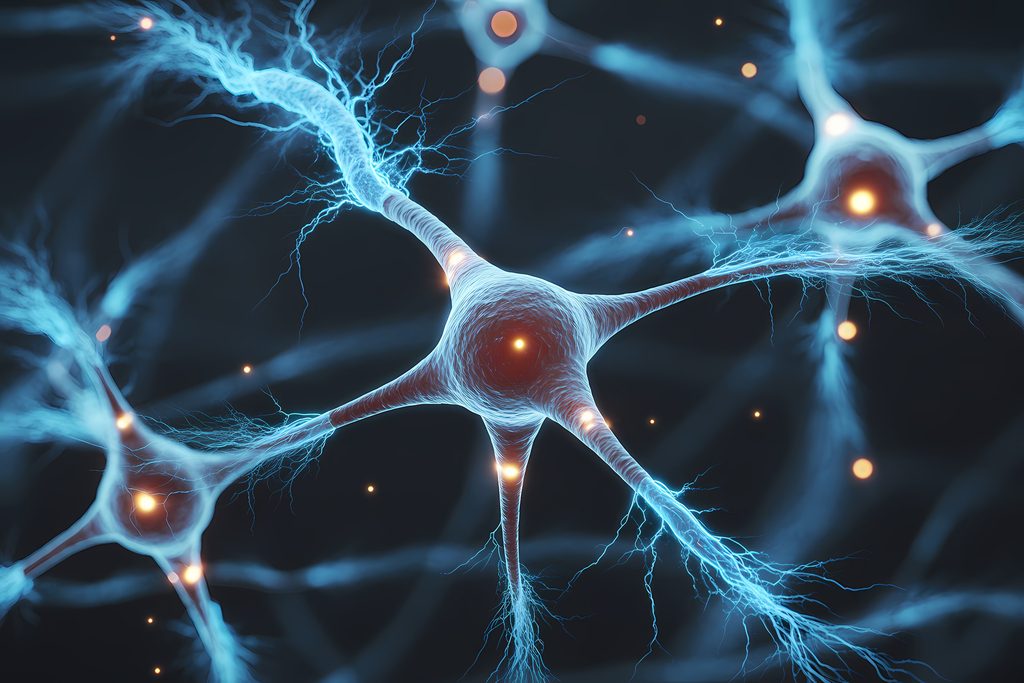
Memories involving deeply negative experiences, such as abuse, the emotional trauma of living with disease or injury, or grief following the loss of a loved one, are closely connected to the brain regions that manage emotions. The same is true of positive experiences, such as being in love or having a profound sense of belonging.
A memory isn’t simply a “file” sitting somewhere in the brain. Memories are thought to exist as patterns of changes in connectivity and activity distributed throughout neural networks. They do not reside in a single brain structure. Think of it as a complex system of pathways that connect, disconnect, reconnect, light up, grow, and shrink in infinite ways. Each configuration contributes to a specific memory and the emotional associations connected to it.
Memories are tagged with an emotion. Emotional associations become part of how the memory itself is encoded. So when you remember a negative experience, the memory can automatically bring aspects of fear, anger, sadness, etc. And when you remember falling in love or an intensely joyful experience, the memory can carry that positive emotional quality with it, as well.
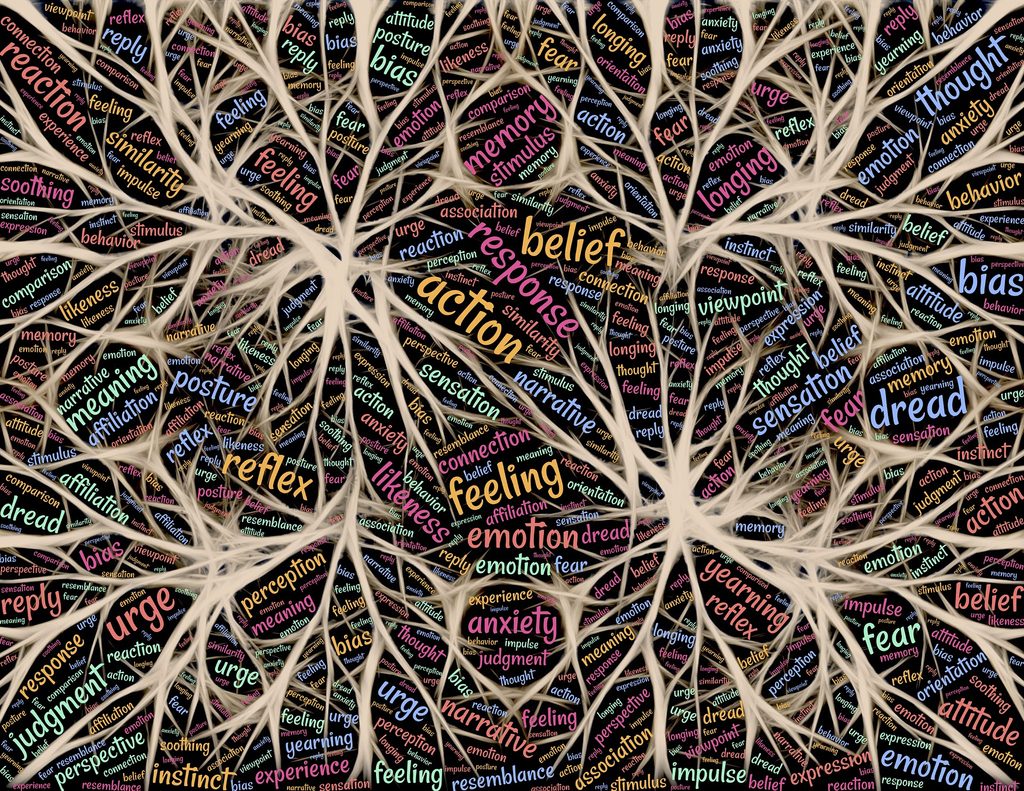
This is why the past can remain “present”, even if we do not consciously choose this. We may know intellectually that something is over, yet when a memory is awakened, the emotional experience associated with it can awaken too.
Something that is significant and interesting is that this can happen even after years of therapy and/or working with mentors to help us let go. When a similar situation is presented, the fears surrounding the past can resurface.
So, does time really heal all? Or does it simply make the memory and emotion lie dormant?
For example, you may have experienced an abusive relationship, and after years of healing, you find yourself in a healthy relationship, only to have those old fears suddenly emerge.
Where did they go for all those years? More importantly, why aren’t they gone after all that work?
When the Brain Learns to Protect Us
There is an important distinction between “the trauma is still there” and “the brain learned something from the trauma that has not yet been updated by the present.”
So, to make this easy to visualize, when something profoundly challenging happens, particularly something repeated, relational, or involving someone trusted, the brain doesn’t simply record what happened. It learns from it.
It learns: “When these circumstances occur, this is what I will now expect, and this is how I need to protect myself.” And this learning can remain even when we have genuinely healed.
You may have processed the experience, understood it intellectually, forgiven people, developed boundaries, rebuilt yourself, and lived for years without experiencing the old fear. That doesn’t mean you are carrying the same emotional state for all those years. It means the brain may still retain what it learned from the experience.
Think about it this way. You experienced an unhealthy relationship, and over time your brain learned: Relationship + vulnerability, intimacy, uncertainty and certain behaviors/expressions = danger.
Years later, you meet someone who is amazing. Consciously, you know: “This person is completely different.”
But then you become vulnerable. You engage in personal conversations. You allow someone into your life on a more intimate level. And something happens within you…”Wait. We’ve seen this movie before.” The fear appears.
You could spend years in circumstances where those neural associations aren’t activated. Then someone genuinely good comes along, you become vulnerable again, and suddenly the old material becomes relevant.
That is not regression. It is the first time your brain has had an opportunity to ask: “Is this actually different now?”
So how do you let go? You give the brain new information.
The neural pathways created through past experiences are not fixed (permanent). They can be changed and updated through new experiences that contradict what the brain previously learned.
Rather than trying to convince yourself that the past did not happen, you begin experiencing something different. You respond differently. You allow yourself to see the situation from a different perspective. And over time, those new experiences can begin to create new associations, ones that are no longer rooted in the same fear, expectation, or emotional response.
You aren’t tricking your mind into forgetting. You are showing it that something has changed.

Making Room
And this brings us back to the question: “After all that work, why isn’t it gone?” Healing doesn’t mean erasing the memory. Old learning can be updated through experiences that contradict the old prediction.
You may be faced with a situation where the old learning is being challenged. Consider that this is not the past returning to take something from you; rather, it is an opportunity to discover what possibilities exist beyond the perceived “risk.” It is an opportunity to let go.
Letting go isn’t only reserved for significant traumas from the past. It could mean letting go of the tense interaction you had at the gas station, or the grocery store being out of the one item you went there to get. The frustration you feel when driving in traffic. The difference in beliefs or lifestyles between you, your friends or family. Or the disagreement you had with your partner or friend.
Letting go isn’t only something we do after profound pain; it is something we practice every day. We are met with unlimited opportunities to let go, to lighten our lives, and to experience depths of joy and fulfillment that aren’t possible without first releasing what we carry.
Think of it this way…
You cannot invite a guest to dinner and ask them to sit at a table still set with yesterday’s meal. The table must first be cleared, because what is worthy of being welcomed deserves a space prepared to receive it.
Sometimes, letting go is simply making room for what comes next.
It’s time to choose: let go, or continue the cycle.
Perhaps that is the real risk of living: choosing what is possible over what is familiar.
Leave a Reply